





Charger
Product information
Guidelines for Proper Use of Battery Chargers for Electric Forklift Batteries
I. Selecting Charger Specifications Suitable for Battery Capacity
This is a critically important factor that directly affects battery lifespan.
If a charger with low charging current is selected, the charging time will be prolonged, which may lead to overcharging. Conversely, if a charger with excessively high charging current is used, the charging time may be insufficient, resulting in undercharging.
II. Proper Battery Charging Procedures
Most chargers available on the market today provide two charging modes: Normal Charging and Equalization Charging. Please contact the supplier to obtain precise instructions on how to activate each mode.
1. Normal Charging
Securely connect the battery to the charger and press the start button. The charger will supply current based on the battery voltage and automatically stop once the battery reaches full charge.
2. Equalization Charging
After approximately 3–4 weeks of operation, slight differences in voltage and electrolyte specific gravity may occur among individual battery cells. At this stage, equalization charging should be performed to ensure proper battery performance.
Depending on the workload and usage intensity, the frequency of equalization charging may be increased or decreased accordingly. Please contact the supplier for specific recommendations.
3. Important Notes Before, During, and After Charging
3.1 Before Charging
Check the charger input voltage to ensure it is within the manufacturer’s specified range:
3-phase, 200 V AC (200 V / 210 V / 220 V / 230 V)
3-phase, 400 V AC (340 V / 360 V / 380 V / 400 V / 420 V / 440 V / 460 V)
Check the electrolyte level through the vent plug and ensure it is within the permitted range.
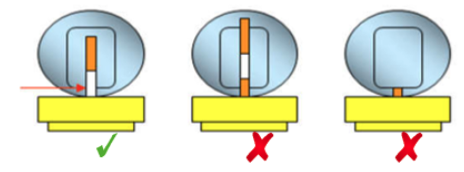
Use only genuine distilled water (manufactured by GS) and refill using dedicated tools to prevent foreign chemicals from entering individual cells, which may affect battery quality or cause damage.
Ensure the charger is securely connected to the battery.
3.2 During Charging
Ensure the electrolyte temperature does not exceed 55°C.
Keep the vent plugs tightly closed.
Place the battery in a well-ventilated area, away from open flames, sparks, or areas with potential static electricity accumulation.
3.3 After Charging
Allow the battery to rest and cool down until the temperature returns to normal (35–45°C). In urgent operating conditions, the resting time must be at least 30 minutes.
Ensure the battery is fully charged in every charging cycle.
Avoid opportunity charging during work breaks. If unavoidable, the battery must be charged to 100%, or a spare battery should be used alternately.
III. Additional Recommendations
Do not use mechanical chargers for electric forklift or electric vehicle batteries.
Do not use chargers with different capacities interchangeably for all batteries.
Perform regular inspection and maintenance of chargers (at least once per year) to ensure compliance with the manufacturer’s charging requirements.
Stop charging immediately if abnormal conditions occur, such as strong acid odor, charging temperature exceeding 55°C, smoke emission, etc., and notify the battery supplier promptly.
Do not repair or modify the charger structure without authorization from the supplier or manufacturer.


Commitment GS Vietnam Battery
Quality commitment
We strictly adhere to international quality management standards, ensuring that every product leaving the factory achieves optimum reliability and performance.- Comply with international standards
- Strict control
- High reliability
- Optimal performance
- Top safety
Committed to Innovation
We continuously research and develop to provide advanced energy solutions, contributing to the development of the battery industry.- Continuous Research
- New Product Development
- Performance Optimization
Commitment to environmental protection
We practice sustainable manufacturing practices, minimize environmental impact and promote product recycling.- Sustainable Production
- Reduce Waste
- Promote Recycling
- Workplace Safety
- Community Development
- Providing Professional Services
- Comply with international standards
- Strict control
- High reliability
- Optimal performance
- Top safety
- Continuous Research
- New Product Development
- Performance Optimization
- Sustainable Production
- Reduce Waste
- Promote Recycling
- Workplace Safety
- Community Development
- Providing Professional Services
Are you looking for the battery for your vehicle?
Viewed products
Contact / Support
You can contact GSV by filling below form. We will contact you as soon as possible or call for advice.HEADQUARTERS & FACTORY 1
No. 18, Road No. 3, Vietnam - Singapore Industrial Park, Binh Hoa Ward, Ho Chi Minh City, VietnamPhone: (0274) 3756 360
Fax: (0274) 3756 362
Purchase Department
ppcmanager@gsbattery.vn
Sales Department
sales-in-factory@gsbattery.vn
(OEM car/motorcycle batteries, batteries and accessories for electric forklifts and batteries for UPS systems)
HCM CITY BRANCH
No. 9, Street 7, Dong Nam Company Housing Area,Van Phuc Urban Area, Hiep Binh Ward
Ho Chi Minh City, Vietnam
Hotline: 1900 8075
Phone: (028) 225 383 60/61/62
Email: saleshcm@gsbattery.vn
FACTORY 2
No. 38VSIP, Road No. 6, Vietnam - Singapore Industrial Park,Binh Hoa Ward, Ho Chi Minh City, Vietnam
Phone: (0274) 3799 139
Fax: (0274) 3799 138
HANOI BRANCH
No. 631 Ngo Gia Tu, Viet Hung Ward, Hanoi City, VietnamHotline: 1900 5555 62
Phone: (024) 3723 6147 Email: saleshn@gsbattery.vn
BINH XUYEN FACTORY
Lot P, Binh Xuyen Industrial Park,Binh Nguyen Commune, Phu Tho Province,
Vietnam
Phone: (0211) 3866 130
Fax: (0274) 3866 131